

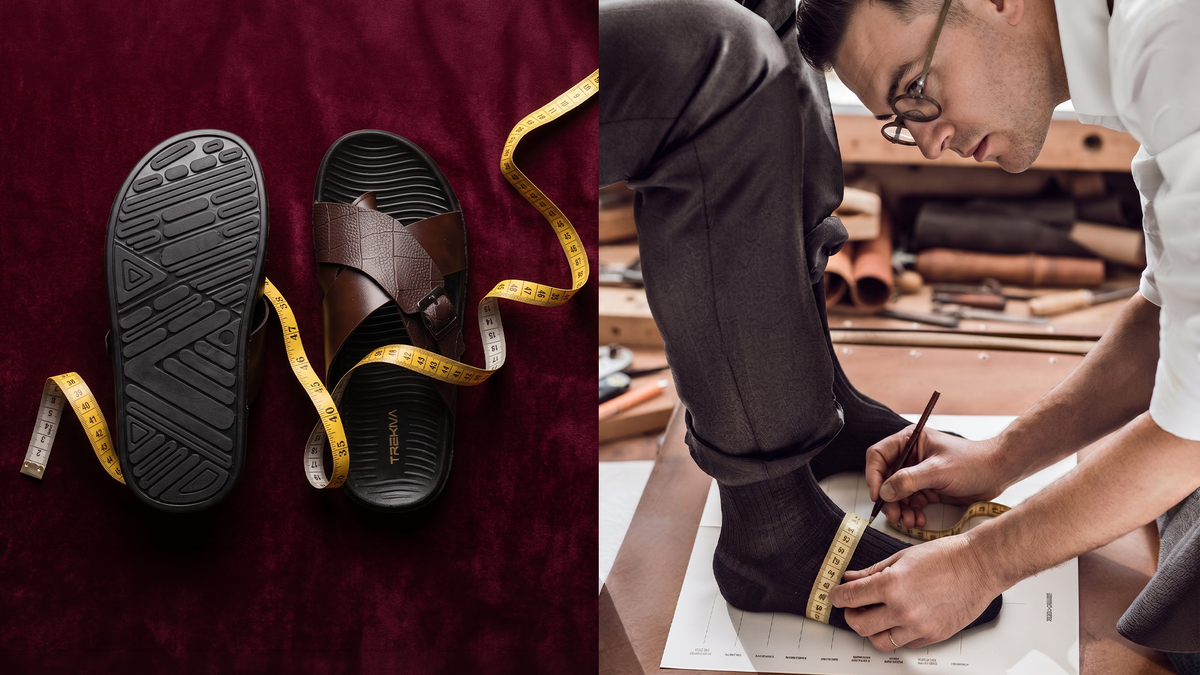
Confused between UK, US, and EU footwear sizes? Learn how to measure your foot at home, avoid common sizing mistakes, and shop footwear online with confidence.
Footwear Sizing and Fit Guide: How to Find Your Perfect Fit Every Time
Buying footwear online should be simple. Pick a size, add to cart, done. But if you have ever ordered a pair of sandals or slippers only to find they pinch your toes or slide off your heel, you already know the truth: sizing is one of the most confusing parts of shopping for footwear, whether you are buying online or in-store.
At Trekiva, we work closely with customers every day, and sizing and fit questions come up more than almost anything else. This guide breaks down exactly why sizing gets confusing, how to measure your feet properly, and what actually matters beyond just picking a number. You can also jump straight to our Trekiva Size Chart if you already know your foot length.
Why Footwear Sizing Confuses So Many Shoppers
The biggest source of confusion we see is not that people do not know their size. It is that they do not realize their size changes depending on where the footwear was made, which sizing system it uses, and even which specific brand they are buying from.
Most customers assume a size 8 is a size 8 everywhere. In reality, a size 8 in the UK, a size 8 in the US, and a size 8 in the EU are three completely different measurements. On top of that, every brand builds its sandals and slippers on slightly different lasts (the mold footwear is shaped around), which means even within the "same" size system, fit can vary from one label to the next.
This is exactly why we always tell customers: never assume your size, always check the size chart for the specific brand you are buying from. Browse our full sandals and slippers collection once you have your size sorted.
Why Buying Footwear Online Feels Risky (and How to Fix It)
As an online-only brand, we hear this hesitation constantly: "I don't want to order footwear online because I can't try it on first." It is a completely fair concern, and it is the single biggest barrier stopping people from buying sandals and slippers online with confidence. The good news is that this fear is almost entirely solvable if you approach the purchase the right way.
You Cannot Try It On, But You Can Measure Precisely
The instinct to try footwear in-store comes from wanting certainty, not from actually needing a physical store. A precise foot-length measurement, checked against an accurate size chart, gives you that same certainty without leaving your house. In fact, it is often more reliable than trying footwear on in a rushed store visit, since you can take your time and measure both feet properly.
Not Every Brand's Size Chart Is Built the Same Way
Part of the online hesitation comes from past bad experiences, where a size chart did not match reality. Our advice is to only trust charts that are based on actual foot length in centimeters, like the one we use at Trekiva, rather than charts that just list a single generic size number. A length-based chart travels across brands far more reliably than a label-based one.
Read Fit Notes, Not Just the Size Chart
Beyond the chart itself, look for any fit notes on the product page, such as whether a style runs narrow, whether straps are adjustable, or whether other customers mention sizing up or down. These small details fill in the gaps that a size chart alone cannot cover.
Understand the Return and Exchange Policy Before You Buy
The real safety net for online footwear shopping is a straightforward return or exchange policy. Knowing you can exchange a size if it does not work out removes most of the risk from the decision, and it is worth checking this before you order rather than after.
Order With Your Measurement in Hand, Not Your Memory
The single biggest shift we encourage is simple: stop shopping by the size you remember buying last time, and start shopping by the foot length you actually measured. This one change removes most of the guesswork that makes people nervous about buying footwear online in the first place.
Understanding UK, US, and EU Sizes
The Core Difference Between Sizing Systems
UK, US, and EU sizing systems are built on different measurement standards, so the numbers do not line up directly. A UK size 8 is not a US size 8. A US size 8 is closer to a UK size 7. This one-size gap between UK and US sizing is the single most common mix-up we see, especially with first-time customers or people buying footwear for the first time from a brand based outside their home country.
EU sizing works differently again. It is based on the Paris Point system, where each size represents roughly two-thirds of a centimeter of foot length. That is why EU sizes jump between numbers like 40, 41, 42, rather than using half sizes the way UK and US systems often do.
The practical takeaway is simple: never convert sizes in your head. Always check a proper conversion or size chart before ordering, especially when buying from a brand for the first time. One helpful shortcut: UK and Indian shoe sizes are the same, so if you know your UK size, you already know your Indian size too.
Why Brand-to-Brand Sizing Varies Too
Even after you sort out UK versus US versus EU, there is a second layer of confusion: brand-specific fit. Two pairs of sandals labeled the exact same size, from two different brands, can fit noticeably differently. This comes down to the last the brand uses, the materials, the strap or toe-post shape, and the overall design philosophy of that brand.
This is why we always recommend checking the size chart for the exact brand and even the exact product category, rather than relying on "what size you normally wear." Your usual size is a helpful starting point, but it is not a guarantee.
How to Measure Your Feet Accurately at Home
The most reliable way to buy footwear online is to measure your actual foot length rather than relying on memory or past purchases. Here is the process we recommend to every Trekiva customer.
Step 1: Set Up Your Measuring Station
Place a sheet of paper on a hard floor, ideally against a wall. Stand on the paper with your heel touching the wall. Measuring in the evening is best, since feet naturally swell slightly throughout the day, giving you a more accurate real-world size.
Step 2: Mark Your Foot
While standing normally with your weight evenly distributed, mark the tip of your longest toe and the very back of your heel on the paper. Keep in mind that for many people, the longest toe is not the big toe, so check carefully.
Step 3: Measure the Distance
Use a ruler or measuring tape to measure the straight-line distance between the two marks in centimeters. This number is your actual foot length, and it is the single most reliable figure to use when checking any brand's size chart.
Step 4: Match It to a Size Chart
Once you have your foot length in centimeters, compare it directly against the brand's official size chart rather than guessing based on your usual size. This is the step most people skip, and it is the one that prevents the most returns. Our full size chart page has this laid out for every style we carry.
The Trekiva Size Chart Explained
We built our own size chart around this exact measuring process, because we wanted customers to be able to trust a straightforward, foot-length-based system rather than guessing across UK, US, and EU labels.
Here is how our men's footwear sizing lines up:
-
UK/India size 6 corresponds to a 24.6 cm foot length, EU size 40, and US size 7
-
UK/India size 7 corresponds to a 25.4 cm foot length, EU size 41, and US size 8
-
UK/India size 8 corresponds to a 26.2 cm foot length, EU size 42, and US size 9
-
UK/India size 9 corresponds to a 27.1 cm foot length, EU size 43, and US size 10
-
UK/India size 10 corresponds to a 27.9 cm foot length, EU size 44, and US size 11
Notice the pattern: US sizing consistently runs about a full size higher than UK/India sizing for the same actual foot length. This is exactly the gap that trips up so many shoppers, and it is why we lead with foot length in centimeters as the most objective reference point on every product page. You can find this same chart linked on every sandals and slippers product page.
Beyond the Number: Other Fit Factors That Matter
Getting the length right is only part of a good fit. Footwear that is the correct length can still feel wrong if these other factors are ignored.
Width
Foot width varies significantly from person to person, and footwear that is long enough but too narrow will cause pinching along the sides, while footwear that is too wide can lead to your foot sliding forward. If you have a wider or narrower foot than average, look for styles with adjustable straps, or size up slightly and rely on those straps to secure the fit.
Arch Support
People with high arches or flat feet often need to pay closer attention to a footbed's structure rather than sizing alone. Correctly sized sandals or slippers with poor arch support can still cause discomfort over long wear, especially if you are on your feet for extended periods.
Break-In Period
Materials like leather and structured synthetic straps typically loosen slightly with wear. Footwear that feels marginally snug out of the box may fit perfectly after a short break-in period, while footwear that already feels loose on day one will likely stretch further and become too big. This is worth factoring in, especially for structured sandals with leather straps.
Fit Differences by Footwear Type
Different footwear categories fit differently even within the same brand and size. Slippers tend to have more forgiving, flexible fits since they are designed for indoor comfort. Sandals rely heavily on strap adjustability, so length matters less than making sure your foot does not overhang the sole or your toes hang off the front edge.
Common Sizing Mistakes We See at Trekiva
The mistake we see more than any other is customers converting sizes in their head using rough rules of thumb instead of checking the actual chart. Someone used to buying UK size 8 will order a US size 8 assuming it is the same, when in reality they likely need a US size 9.
The second most common mistake is ignoring foot length measurement entirely and relying purely on the size printed on the label of a completely different brand. Because every brand's last and fit profile is slightly different, this "size by memory" approach is where most avoidable returns come from.
Our Advice: How to Order Footwear With Confidence
Our strongest opinion on this, after seeing thousands of sizing questions, is that foot length in centimeters should always be your starting point, not the size label from your last pair of sandals or slippers. Every time a customer measures their foot properly and checks it against our chart, the fit issues drop dramatically.
Before you order your next pair of footwear, from Trekiva or any brand:
-
Measure your foot length in centimeters using the wall-and-paper method
-
Check that specific brand's official size chart rather than assuming a universal standard
-
Consider the footwear category, since sandals and slippers fit differently even at the same size
-
Account for width and arch support if you know these are areas where you typically struggle with fit
-
Give leather or structured straps a short break-in period before judging the fit as final
Frequently Asked Questions
Is UK size the same as US size for footwear?
No. UK and US sizing systems do not match up directly. A US size is typically about one full size larger than the equivalent UK size for the same actual foot length, so a UK 8 is closer to a US 9.
How do I convert my UK shoe size to US or EU?
The most reliable way is not to convert the number at all, but to measure your foot length in centimeters and match it against the brand's official size chart, since the same conversion does not hold true across every brand. Our size chart shows the UK, US, and EU equivalents side by side based on foot length.
Why does the same size fit differently across brands?
Every brand designs its footwear on a different last, or mold, and uses different materials and structures. This means a size 8 from one brand can feel noticeably different from a size 8 from another, even though the label says the same number.
Should I size up for sandals or slippers?
Not necessarily. Because sandals rely on adjustable straps, getting your foot length correct matters more than sizing up. Slippers are generally more forgiving, but sizing up is only useful if you know you have wider feet or plan to wear thicker socks.
What is the best way to measure my foot size at home?
Stand on a sheet of paper with your heel against a wall, mark your longest toe and heel, then measure the distance between the marks in centimeters. Match that number to the brand's size chart, such as our Trekiva Size Chart, rather than relying on the size you normally buy.
What if I am between two sizes?
If your foot length falls between two sizes on the chart, it generally comes down to the footwear type. For sandals with adjustable straps, sizing down is usually fine. For slippers or anything without adjustability, sizing up gives more comfortable room.
Final Thoughts
Sizing does not have to be a guessing game. The confusion between UK, US, and EU systems, combined with the natural differences between brands, is real, but it is also completely solvable once you know your actual foot length and know to check it against the right chart every single time.
At Trekiva, we built our sizing process around this principle because we would rather you order once and love the fit than deal with the hassle of a return. Measure once, check the Trekiva Size Chart, and shop our sandals and slippers with confidence.

