

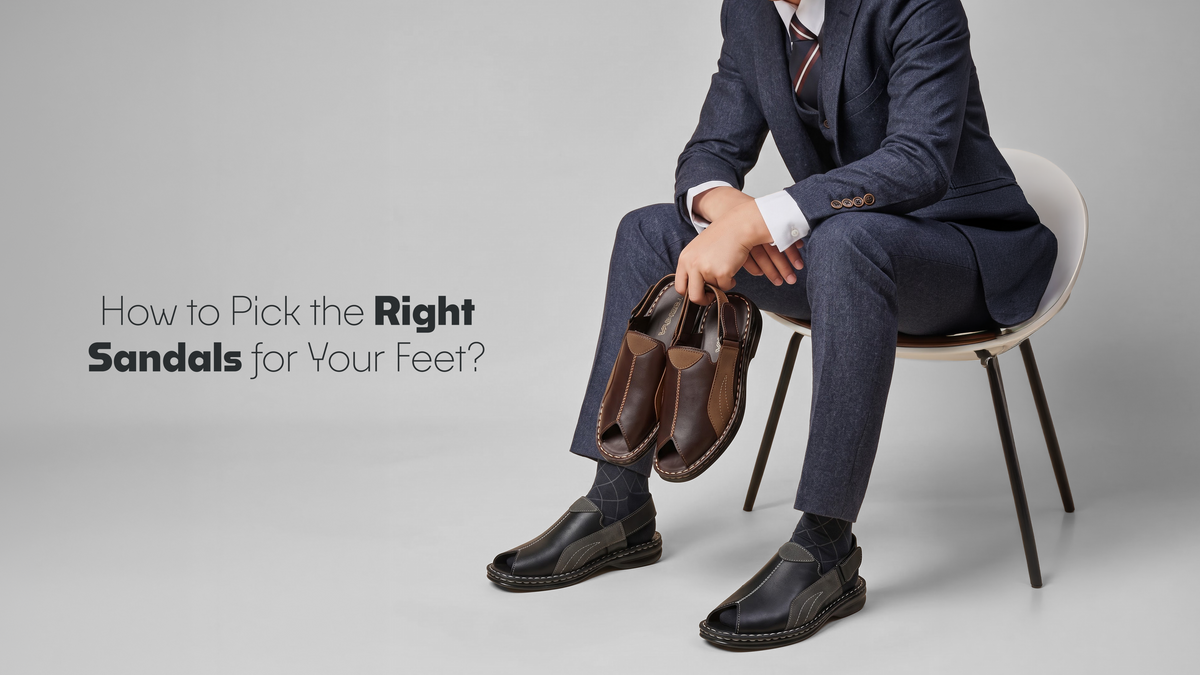
We run an ecommerce footwear brand that sells men's sandals, slippers, clogs, and sliders on platforms like Amazon, Flipkart, and Myntra. After selling thousands of pairs online, I have learned something most people do not think about until it is too late. Picking the right sandals is not really about style first. It is about understanding your own feet first.
I have seen this happen again and again through customer returns, reviews, and messages. Most of what goes wrong when someone buys sandals online has very little to do with the product itself. It usually comes down to how the person approached the buying decision.

The Number One Problem: Wrong Sizing
If there is one issue that shows up more than anything else in our returns, it is sizing. Not comfort. Not design. Sizing.
We build our footwear keeping comfort, pricing, and arch support in mind. A lot of thought goes into the footbed and the fit. But even with all of that, the most common reason for a return is simply that the size did not match the customer's foot.
Sandals are far less forgiving than closed shoes when it comes to sizing. With sneakers or formal shoes, laces and closed structures can compensate a little if the size is slightly off. Sandals do not have that flexibility. If the length or width is wrong, you feel it right away. Either your foot hangs over the edge, or there is too much room and the strap placement feels off.
That is exactly why every product listing includes a detailed size chart. Even then, so many returns happen simply because people skip past it. My honest advice, based on watching this pattern for years, is simple. Always check the size chart before ordering, every single time, even if you think you already know your size. Brands vary a lot. What is a size 9 in one brand can feel completely different in another. Measure your foot length, compare it against the chart, and do not rely on memory or on what size you wear in another brand. If you want a starting point, browse our men's sandals collection and check the size guide on any product page before you add it to your cart.

It Is Not Just About Size. It Is About Foot Type
Sizing solves half the problem. The other half is understanding your own foot type, because comfort depends a lot on it.
When we started building our sandals, sliders, and clogs, we were not designing for "a foot" in general. We were designing for the different kinds of feet we kept seeing in customer feedback and return patterns. A few things became very clear over time.
-
Customers with flat feet often mentioned heel pain and tiredness after wearing sandals for a while. This pushed us to make sure our footbeds have real arch support built in, not just a soft layer sitting on a flat sole.
-
Customers with high arches had the opposite issue. They did not need more support. They needed more flexibility and shock absorption, so a softer, more flexible midsole worked better for them.
-
People who stand for long hours, like delivery staff, shopkeepers, and people working from home in slippers all day, cared about durability and grip as much as comfort. This is actually where our clogs performed better than our sliders, because a closed toe design gives more stability during long standing hours.
-
Customers with wider feet were almost as likely to return a product as those who picked the wrong size. They would order the correct length but still feel tightness across the width, because fit is not just about length. It is about shape too.
That last point changed how I think about footwear completely. We stopped treating comfort as one size fits all and started building around real foot shapes. Arch support for flat feet, flexible cushioning for high arches, wider straps or clog style designs for wider feet, and slip resistant soles for people who are on their feet all day.
How to Actually Choose the Right Pair for Yourself
If you are buying sandals, especially online where you cannot try them on first, here is how we would suggest approaching it, based on everything we have learned from the seller's side.
-
Know your foot type before you shop. Do you have flat feet, high arches, or wider feet? This one bit of self awareness changes everything about what you should be looking for.
-
Always check the size chart, every time. Do not assume your size carries over from another brand or another pair you already own.
-
Picture how it will actually feel, not just how it looks. Before ordering, imagine the sandal on your feet. Not just how it looks in the photo, but how the strap will sit, how the sole will feel with every step, and whether it matches how your feet behave during the day.
-
Match the design to your foot type, not just your style preference. If you have flat feet, choose comfort and arch support over how trendy a design looks, because heel pain will matter more than style after a few hours of wear. If you have wider feet, be very specific about sizing and check width details in the listing or reviews before you order. Our men's slippers range is a good place to start if you want everyday comfort with proper arch support.

My Honest Take
If someone reading this takes away just one thing, it is this. Do not buy sandals the way you would buy a T-shirt. With a T-shirt, if the fit is slightly off, it is not a big deal. With sandals, the wrong choice means discomfort with every single step you take that day.
Before you order, actually picture the look and feel of the sandal on your feet, not just how it looks in the product photo. Think about your specific foot type. If you have flat feet, lean toward comfort and support over style, because heel pain is a real and common issue for flat footed people in unsupportive sandals. If you have wider feet, do not just glance at the size. Study it, because width mismatches are one of the most overlooked reasons sandals end up uncomfortable or get returned.
Get the size and the foot type right, and the sandals will almost always feel right too.
Frequently Asked Questions
How do I know my correct sandal size when ordering online?
Always check the size chart given on the product page instead of going by the size you wear in another brand. Measure your foot length in centimetres while standing, then match it with the brand's size chart. Sizing can vary quite a bit between brands, so this one step avoids most sizing related returns.
Which type of sandals are best for flat feet?
If you have flat feet, look for sandals with proper arch support built into the footbed, not just extra cushioning. Flat footed people often feel heel pain after long use if there is no real arch support, so comfort should be the priority over style.
Are sandals good for people with high arches?
Yes, but the requirement is different from flat feet. People with high arches usually do better with a softer, more flexible midsole that absorbs shock, rather than a rigid, highly structured sole.
What should people with wide feet keep in mind while buying sandals?
Width matters as much as length. Even if the length is correct, a narrow design can feel tight across the width. Check the product description and reviews for width related feedback, and consider styles with adjustable straps or a slightly relaxed fit.
Are clogs or sliders better for people who stand all day?
Clogs generally work better for long standing hours because the closed toe design offers more stability and grip. Sliders are more convenient for quick, short use, like around the house.
Why do sandals get returned more often than other footwear when bought online?
Mainly because of sizing. Sandals are less forgiving than closed shoes since there is no lace or closed structure to adjust the fit. A size that is even slightly off becomes noticeable immediately, which is why checking the size chart carefully before ordering is so important.


